
Aomori Sake Guide: Snow, Clean Aromas, and Seafood-Friendly Drinking

When people outside Japan hear “Aomori,” they may think of apples first. That is understandable. Aomori is famous for apples.
But from a sake perspective, Aomori is much more than an apple region.
Located at the northern tip of Japan’s main island, Aomori is shaped by snow, cold winters, clean water, rice, seafood, and local food culture. It is also surrounded by different seas and bays, which gives the region a strong connection to fish, scallops, squid, and other seafood.
That makes Aomori a useful region for understanding sake.
Aomori sake can be clean and aromatic.It can be smooth and easy to approach.It can also show rice flavor, umami, and food-friendly depth. For beginners, Aomori is a good reminder that sake does not need to be understood only through technical terms. It becomes easier when you connect it to place, climate, rice, and food.
1. First, where is Aomori?
Aomori Prefecture is located at the northern end of Honshu, Japan’s main island.
It sits between several bodies of water, including Mutsu Bay, the Sea of Japan, and the Pacific Ocean. It is also known for cold winters, heavy snow in many areas, and strong regional food traditions.
This geography matters.
Aomori is both a snow-country region and a seafood region.
The snow-country side helps explain cold-climate brewing, clean water, winter food culture, and fermentation.The seafood side helps explain why many Aomori sake styles make sense with scallops, squid, fish, and salty or savory dishes.
So before talking about flavor, it helps to remember this:
Aomori sake belongs to a place of snow, water, rice, and seafood.
2. Aomori sake can be an easy entry point
One reason Aomori is useful for beginners is that many people can start with its clean, approachable side. Some Aomori sake can feel aromatic, smooth, and easy to drink.That makes it less intimidating for people who are new to sake.
Because Aomori is strongly associated with apples, it can also be tempting to describe everything through fruit. That can be useful as an entry point, but it is too simple.
Aomori sake is not only about fruity aroma.
It can also show:
clean texture
rice flavor
gentle sweetness
umami
seafood compatibility
different expressions at different temperatures
At our tasting, the clean and aromatic styles were easy for guests to understand. But the more interesting lesson was that Aomori sake has more range than many people expect.

3. Rice matters: Hana-Fubuki, Hana-Omoiy, and Hohai rice
Rice is one of the most useful ways to understand regional sake.
For Aomori, three rice names are especially useful:
Hana-Fubuki
Hana-Omoiy
Hohai rice
Hana-Fubuki has been one of Aomori’s important sake rice varieties. It gives drinkers a useful starting point for thinking about Aomori’s regional sake identity.
Hana-Omoiy is an Aomori sake rice associated with ginjo and daiginjo-style brewing. For beginners, it can help explain why some Aomori sake feels aromatic, refined, and clean.
Hohai rice is closely connected to Hohai, a well-known sake from Miura Shuzo. This kind of connection between rice and brand story makes sake easier to remember.
For international drinkers, sake rice can be compared loosely to grape varieties in wine. It is not a perfect comparison, but it helps. When you see these rice names on a label or in a sake description, they give you a clue:
This sake is trying to express something local.

4. Temperature changes the experience
At Weekly Sake Flight, we regularly explore how temperature changes the experience of sake. At the Aomori tasting, we again used temperature as a way to show how the same sake can express different sides.
Many people still think sake is either “cold premium sake” or “hot cheap sake.” That is too simple.
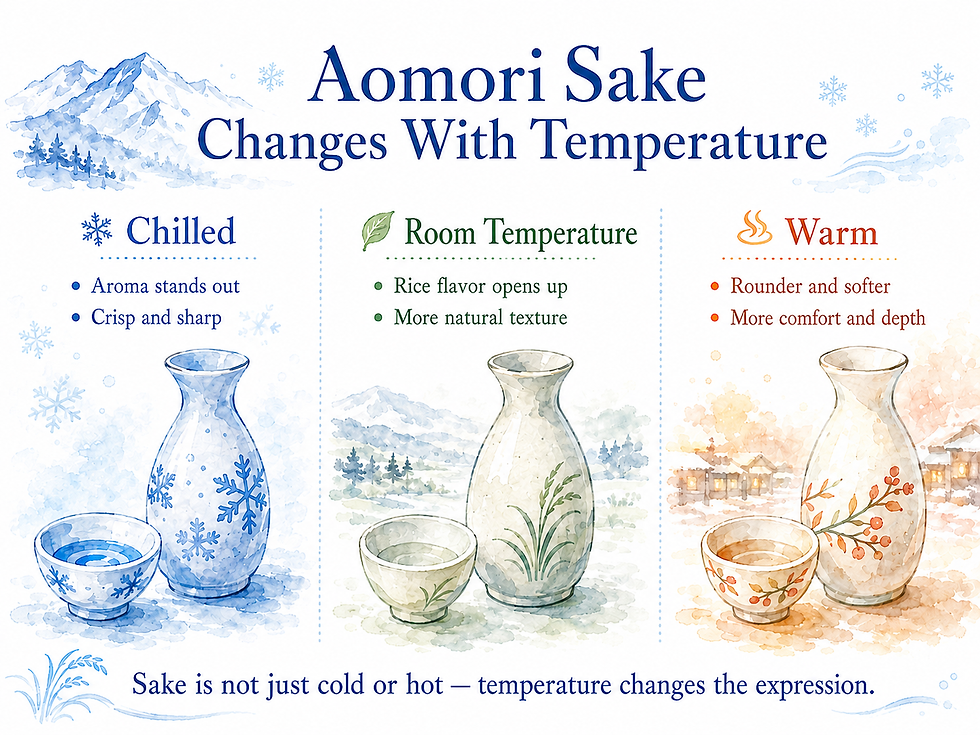
Temperature is a serving tool.
Some sake feels brighter and cleaner when chilled. Some becomes more balanced at room temperature. Some opens up when gently warmed. Different approaches to warming sake showed how much the same sake can change depending on temperature. The texture, aroma, rice flavor, acidity, and umami can all shift.
For beginners, this is one of the best ways to learn sake without needing difficult vocabulary.
Try the same sake chilled, at room temperature, and gently warmed.You may feel like you are tasting three different expressions. That is one reason sake is so interesting.
5. Sake can also be blended or mixed

At Weekly Sake Flight, we also regularly explore blended or cocktail-like sake expressions as part of showing how flexible sake can be. At the Aomori tasting, we again introduced this more playful side of sake.
Sake is often treated as something that must be drunk exactly as it is. In many cases, that is the best way to appreciate the brewer’s intention. But sake can also be explored more freely.
Blending, changing temperature, or using sake in a cocktail-like way can reveal a different side of the drink. It can also make sake more approachable for people who are still learning what they like. This does not mean every sake should be mixed. It means sake can be more flexible than people often assume.
For restaurants, bars, and hospitality professionals, this is useful.
Some guests want classic sake service.Some guests want food pairing.Some guests want a more playful entry point.
Aomori sake can support more than one kind of experience.

6. Aging and old sake add another layer
The tasting also led to a discussion about aging and old sake.
Fresh sake is not the only style worth exploring. Some sake changes with time. Aroma, color, texture, sweetness, acidity, and umami can all develop as sake ages.
For beginners, the terminology can be confusing.
“Aged sake” and “old sake” are sometimes used in different ways depending on the producer, category, or context. So the most important thing is not to memorize a strict definition first.
It is more useful to taste the difference. Fresh sake can feel bright and lively. Sake with some aging can feel rounder or deeper.Older sake can show more developed aromas, color, and complexity. Once you notice this, sake becomes much more three-dimensional. It is not only about region or rice.It is also about time.

7. Food makes Aomori sake easier to understand
Aomori food helps explain Aomori sake.
Some local foods and ingredients connected to Aomori include:
Mutsu Bay scallops
squid
apples
garlic
nagaimo yam
Tsugaru-zuke
ichigo-ni seafood soup
senbei-jiru cracker soup
These foods are not just side dishes. They help explain the region.
Scallops and squid can work well with clean, smooth sake.Savory and fermented foods can bring out umami.Garlic-based foods need sake with enough structure.Apple-based foods can connect to aroma, sweetness, and acidity.
This is why sake becomes easier when we stop asking only, “Is it dry or fruity?”
A better question is:
What food would this sake make more enjoyable?
That question makes Aomori sake much easier to understand.

8. How beginners can start with Aomori sake
If you are new to Aomori sake, start simply.
1. Try a clean, aromatic style first
This is an easy entry point. Look for smooth texture, gentle aroma, and a refreshing finish.
2. Try it with seafood
Scallops, squid, fish, and savory seafood snacks can make Aomori sake much easier to understand.
3. Change the temperature
Do not judge the sake only when chilled. Try room temperature or gentle warming when appropriate. You may find more rice flavor, softness, or depth.
4. Stay open to different serving styles
Sake does not always need to be serious. Temperature changes, blending, and creative serving can help people discover what they enjoy.
Final Takeaway
Aomori sake is not only about apples.
It connects:
snow-country brewing
clean water
local rice
aromatic sake styles
seafood
fermentation
temperature
playful serving possibilities
For international drinkers, Aomori is useful because it teaches one important lesson:
Sake becomes easier to understand when you connect it to climate, food, and the way people drink. The next time you see a bottle from Aomori, do not only ask whether it is fruity, light, or premium.
Ask instead:
What part of Aomori does this sake express?
Would it work with seafood?
What happens if I warm it slightly?
Does the rice or brewery story tell me something local?
Is there another way to enjoy it?
That is where Aomori sake becomes much more interesting.


Comments